
Why Breathing Can Contribute to Night Sweats
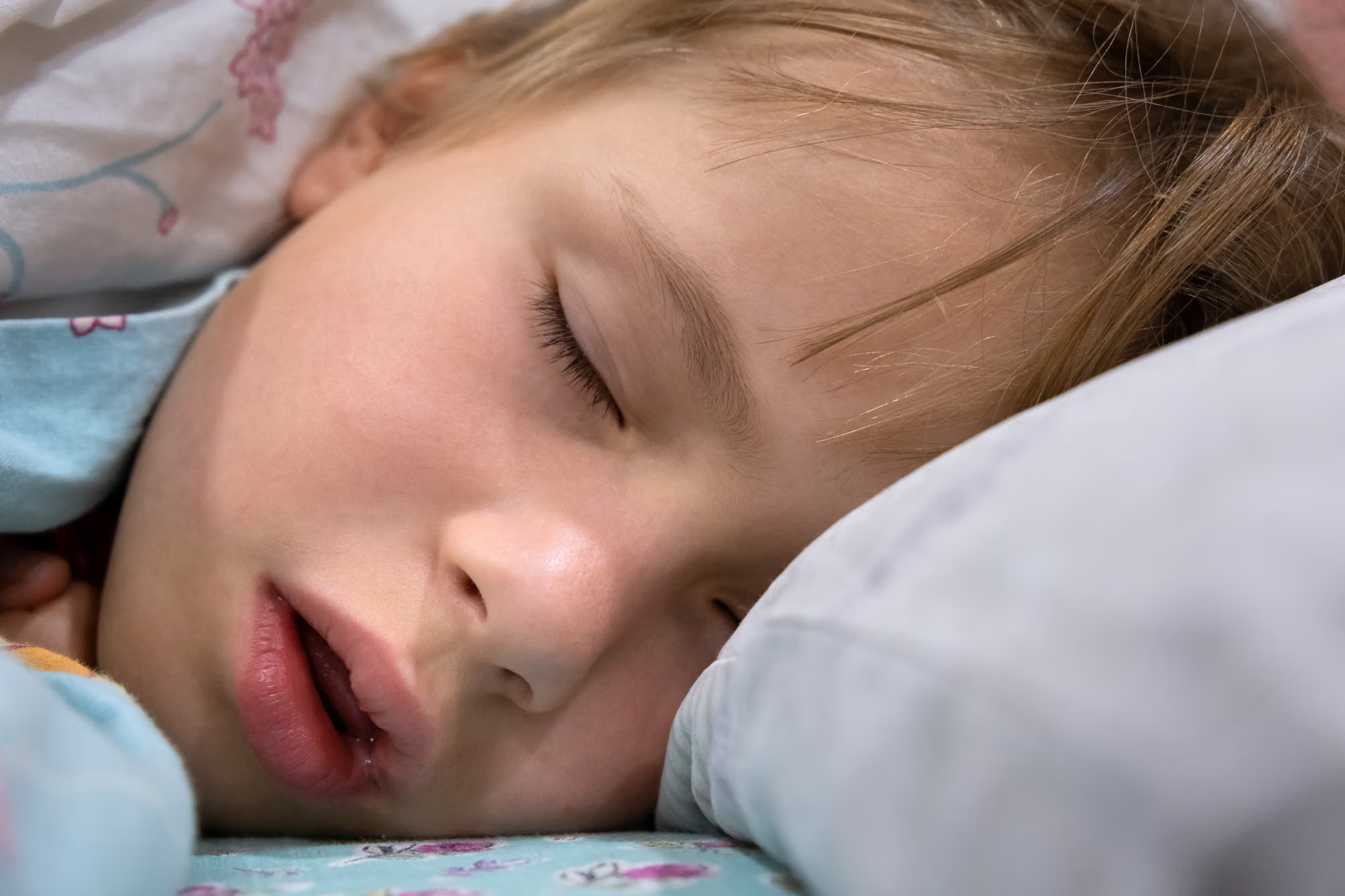
If you’re regularly changing damp pajamas or soaked pillowcases, you might be wondering what’s making your child sweat so much. When sweating comes with snoring, restless sleep, or visible effort to breathe, sleep-disordered breathing is worth discussing with their healthcare team.
Obstructive sleep apnea (OSA) is a form of sleep-disordered breathing involving repeated partial or complete upper-airway blockage. During sleep, the muscles supporting the upper airway relax. In children, several factors can contribute to that blockage, including enlarged tonsils or adenoids, nasal obstruction, tongue-tie, and differences in jaw anatomy. A child may have one or a combination of these factors, leaving less room for air to pass through, causing extra effort to breathe and experiencing brief disruptions in sleep without fully waking.1 The extra breathing effort and the body’s responses to restricted airflow can contribute to sweating heavily as they struggle for oxygen.
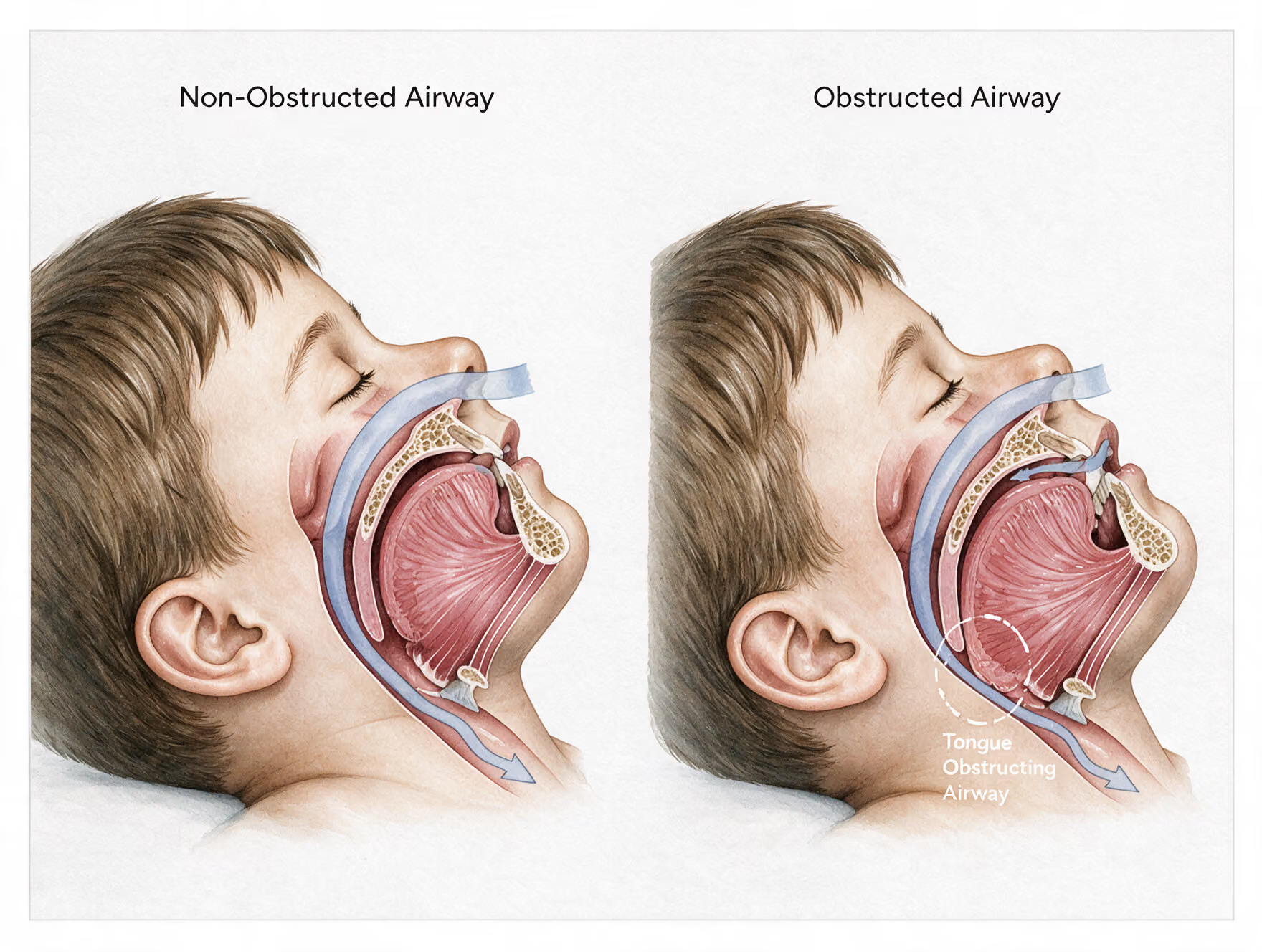
A warm room, heavy bedding, fever, and some medications can also cause sweating.2 Your pediatrician can assess those possibilities, while our team examines how the mouth and developing jaws might be contributing to breathing difficulties.
Why I Ask About Breathing
One of my biggest regrets coming out of dental school is telling a parent that their child’s snoring was normal and they would grow out of it. Today, when a parent mentions frequent night sweats, I ask about breathing and sleep, too.
Research supports making that connection. A study of more than 6,000 school-aged children found that night sweats were associated with symptoms suggestive of obstructive sleep apnea, allergic rhinitis, tonsillitis, and other sleep problems.3 Sweating doesn’t establish the cause, but it gives us a reason to look at the child’s sleep more closely.
Look at the Whole Pattern
Tell us if the sweating comes with any of these signs:
- Regular snoring: never okay, expected occasionally during a cold.
- Mouth breathing: During sleep or throughout the day.
- Restless sleep: Frequent tossing, turning, or waking.
- Gasping or breathing pauses: Including visible effort to breathe.
- Bedwetting: Particularly when it returns after a period of dry nights.
Morning headaches, unusual daytime tiredness, irritability, or difficulty paying attention may also be relevant. Children with disrupted sleep can sometimes seem more restless or hyperactive rather than sleepy.4
These symptoms can have different causes, so we consider them together. I encourage parents to bring these observations to an appointment, even if they seem unrelated to teeth. Sleep and breathing are part of whole-body health, and what happens overnight can affect how a child feels during the day.
One Family’s Experience
In our podcast conversation, a mother describes how her 12-year-old’s heavy night sweats prompted his pediatrician to recommend a dental evaluation. He was already wearing braces, so the connection between dentistry and sleep surprised her.
A sleep study showed that his sleep was being disrupted. His braces were then removed, and our team expanded his palate to create more room for his tongue and address a possible structural contributor to his breathing difficulties. His mother reported that expansion was the only treatment he received.
His story illustrates why we ask about sleep symptoms during a dental evaluation. The treatment decision was specific to him; changes to an existing orthodontic plan require individual assessment and coordination with the clinicians involved.
Concerned About Your Child’s Sleep?
If night sweats occur alongside snoring, mouth breathing, or restless sleep, our team will assess possible dental contributors and discuss whether further medical evaluation is needed.
What an Airway Evaluation Can Tell Us
We review your child’s sleep symptoms, health history, and previous evaluations, then examine the mouth and developing jaws. Findings such as a narrow palate, restricted tongue movement, or visible tonsil enlargement help guide further assessment.
A sleep questionnaire can organize symptoms, but it cannot diagnose sleep apnea. If imaging is appropriate, a 3D dental scan can provide information about anatomy; it cannot show how your child breathes throughout the night.
When sleep apnea is suspected, a medical specialist determines the appropriate testing. An overnight sleep study records breathing and other sleep measurements to help establish the diagnosis.5
How Treatment Is Chosen
Our approach considers whether jaw development and oral function are contributing to breathing difficulties. Dental treatment might be part of the plan, depending on your child’s age, anatomy, and medical findings.
Palatal Expansion and Growth Guidance
A palate expander gradually widens a narrow upper jaw. The palate also forms the floor of the nasal cavity, so expansion can change the surrounding anatomy as well as create room for teeth.
For selected children, expansion can be an option as part of a coordinated sleep-apnea treatment plan.6 When a narrow upper jaw contributes to breathing difficulties, palatal expansion is a central part of our approach. We use it to address that structural restriction, with the goal of improving breathing during sleep. Your child’s evaluation guides the treatment plan, and follow-up helps determine whether sleep apnea has improved or whether additional care is needed.
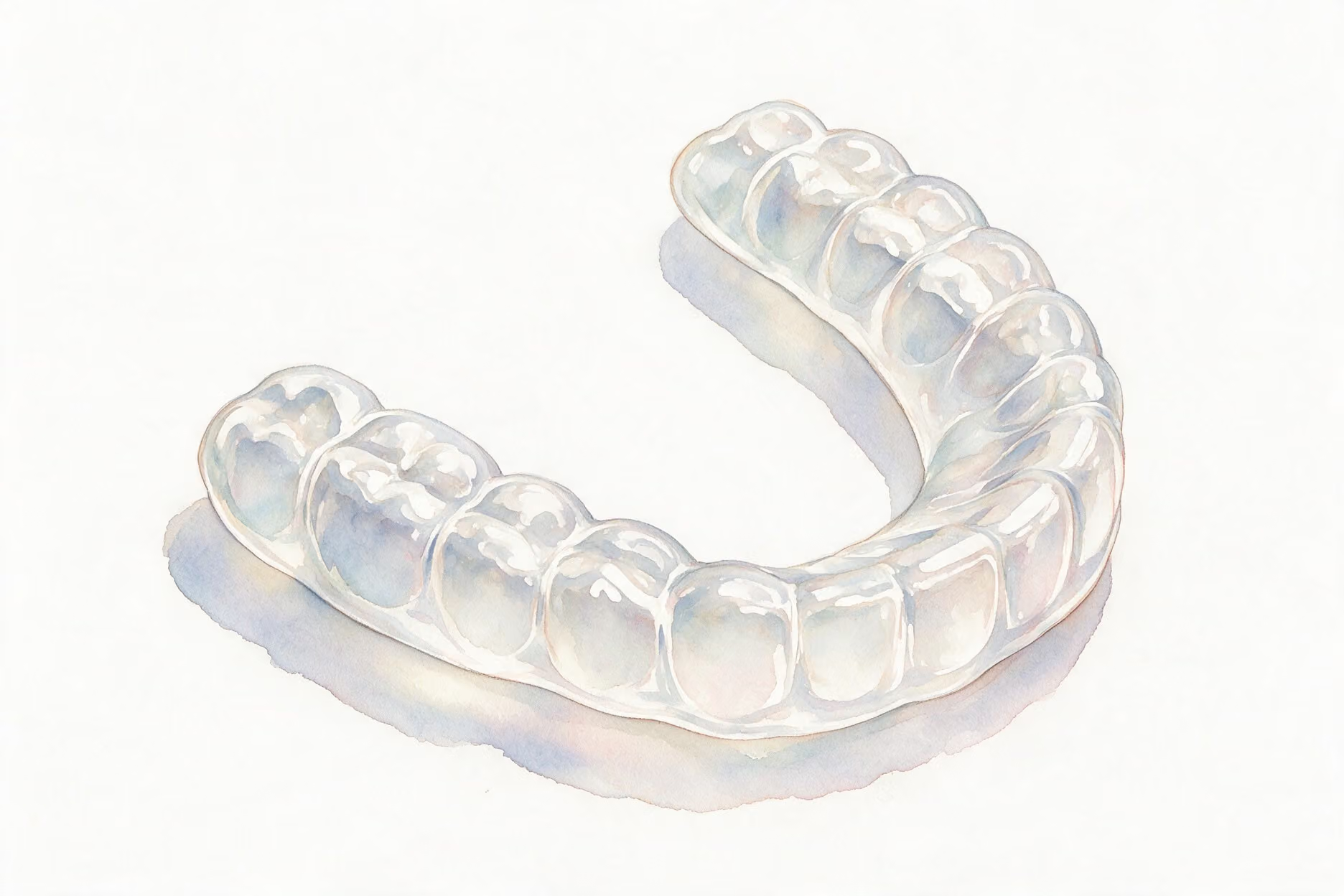
For some younger children, our team may consider a soft oral appliance such as Toothpillow to support oral posture and developing jaw relationships. We explain its purpose and limitations; it is not a proven treatment for night sweats or a replacement for medical sleep care.
Oral Function and Specialist Care
If tongue movement is restricted, we assess its effect on function before discussing whether a tongue-tie release is appropriate. Myofunctional therapy can also be used to work on tongue and lip function and oral resting posture. Neither should be assumed to resolve sleep apnea on its own.
Enlarged tonsils, adenoids, and nasal obstruction require medical assessment. Our team may coordinate with your pediatrician, a sleep specialist, or an ear, nose, and throat doctor so care addresses the contributors identified. Continue prescribed treatment unless the clinician managing it advises a change.
What Parents Can Do Next
Note how often the sweating occurs, whether the room or bedding is warm, and any changes in breathing, sleep, or daytime behavior. Bring those observations and a medication list to your pediatrician.
Persistent or unexplained sweating deserves medical attention. Seek prompt evaluation if it occurs with fever, unexplained weight loss, shortness of breath, or nighttime gasping and breathing pauses.7 If your child is currently struggling to breathe, turns blue or gray, or is difficult to wake, call 911.
Recurring night sweats can be a clue to disrupted breathing, especially when other sleep symptoms are present. My guidance is to look at the whole pattern: understand the cause, assess any dental contributors, and choose care that supports your child’s sleep and overall health.
Take a Closer Look at Your Child’s Breathing
If your child regularly sweats at night and shows other signs of disrupted sleep, an airway evaluation can help clarify whether the mouth and jaws are contributing.
Sources:
- American Academy of Pediatric Dentistry. “Policy on Obstructive Sleep Apnea.” Revised 2026.
- MedlinePlus Medical Encyclopedia. “Sweating.”
- So HK and colleagues. “Night sweats in children: prevalence and associated factors.” Archives of Disease in Childhood, 2012.
- American Thoracic Society. “Obstructive Sleep Apnea in Children.”
- American Thoracic Society. “Obstructive Sleep Apnea in Children.”
- American Academy of Pediatric Dentistry. “Policy on Obstructive Sleep Apnea.” Revised 2026.
- MedlinePlus Medical Encyclopedia. “Sweating.”