
ORTHODONTIC CARE
Airway Orthodontics
Straight teeth matter—but so does the space behind them
When the jaws do not grow wide or forward enough, there may not be enough room for the teeth, tongue, and airway to function well together. Airway orthodontics focuses on creating that space, so treatment supports not just alignment, but breathing, sleep, and long-term stability.

The Root-Cause Approach
Traditional orthodontics often focuses on aligning teeth within the space that already exists. Airway orthodontics looks at why that space was limited in the first place.
For us, that means looking at more than the smile alone. We consider how the jaws, tongue, bite, and airway are working together—then build treatment around that full picture.
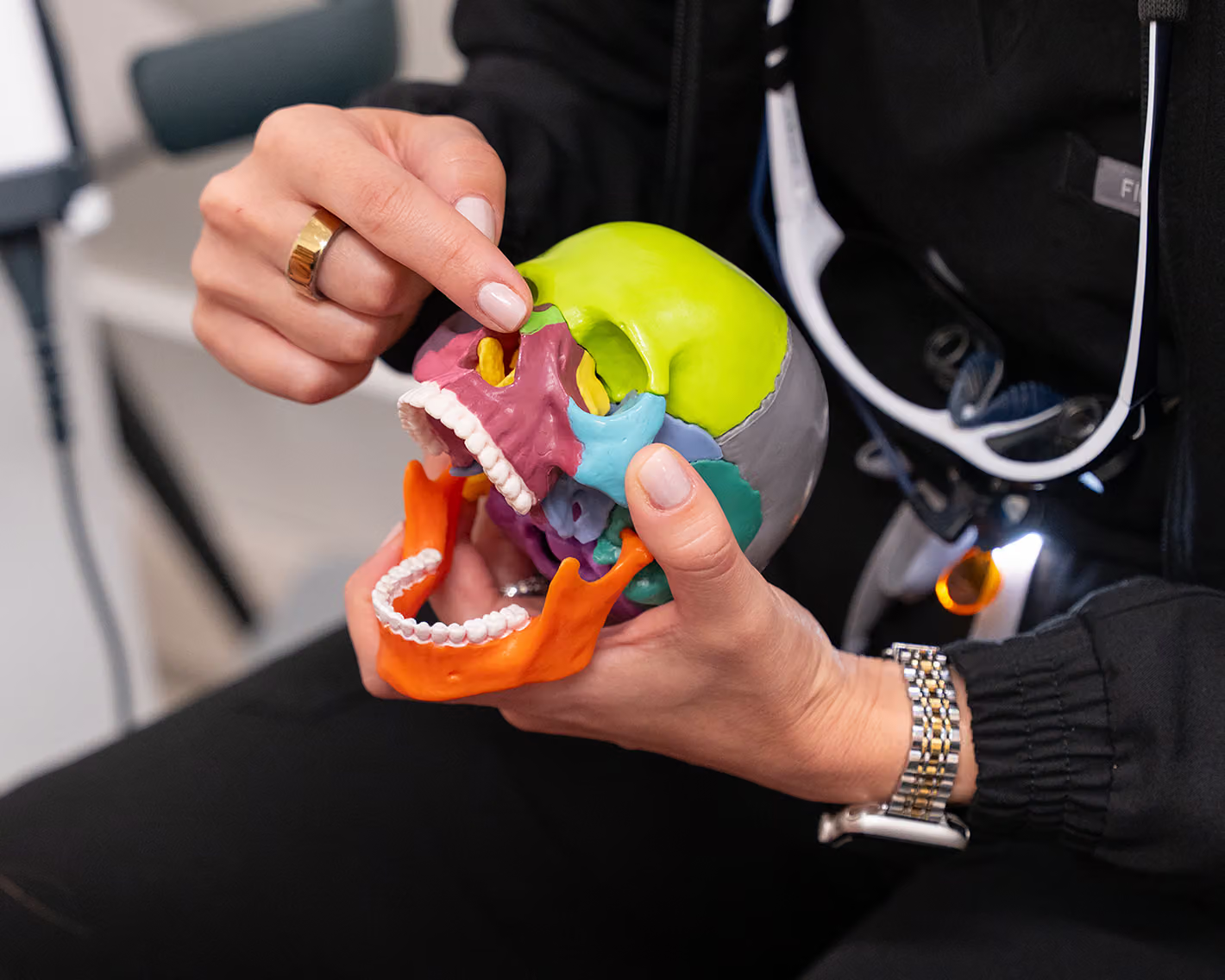
Function-Led Planning
Bite, tongue posture, airway signs, and sleep history help shape the treatment plan, not just the cosmetic goal.
Creating Space
When crowding is tied to a narrow arch, treatment may need to begin by creating room rather than simply lining up teeth.
The Goal: Lasting Results
Myofunctional therapy, tongue-tie evaluation, and healthy oral function can all play a role in making orthodontic results more stable over time.
THE WARNING SIGNS OF AIRWAY ISSUES
When the mouth does not have enough room to grow well, the signs can show up in the teeth, the bite, breathing, or sleep.
In Growing Children
- Crowded or overlapping teeth
- Mouth breathing during the day or while sleeping
- Restless sleep, snoring, or other signs of disrupted breathing
- Early bite issues, such as crossbite or underbite
In Teens and Adults
- Snoring or chronic fatigue
- Jaw tension, clenching, or TMJ symptoms
- A history of extractions or orthodontic relapse
- Crowding, narrow arches, or signs that the tongue does not have enough space
When several of these signs begin to show up together, airway orthodontics may help us understand whether limited space is part of the picture.
HOW IT WORKS
From Evaluation to Long-Term Stability
Evaluation
We begin with a full evaluation, including 3D CBCT imaging, to understand your airway, jaw structure, bite, and available space.
Treatment Planning
From there, we determine whether airway orthodontics is the right approach and build a plan around your anatomy, growth stage, and overall goals.
Expansion and Function
If treatment moves forward, we use custom expanders to create space while myofunctional therapy helps support healthier tongue posture and swallowing patterns.
Refinement and Follow-Up
Once the foundation is in place, we may use Invisalign® to fine-tune alignment and continue monitoring progress over time to support stable, lasting results.
More Than Just a Straight Smile.
By addressing the root cause of crowding, the benefits can extend well beyond appearance.
- Better Breathing: Creating more room for the tongue and airway can support easier breathing and better sleep quality.
- Healthier Development: Guiding the jaws as they grow can support better balance in the bite, facial development, and overall function.
- Stable Results: When alignment is supported by healthier muscle patterns and better jaw development, results are easier to maintain over time.
- No Extractions: When crowding is caused by limited space, our goal is to create room rather than remove healthy teeth.

What to Expect
Treatment Timeline
Treatment often begins with an active expansion phase, followed by Invisalign® to refine alignment once space has been created.
Comfort & Adaptation
Most patients adjust well to appliances over time. Our non-surgical approach is designed to work gradually and support the body’s natural development.
Personalized Treatment
Every case is different. We plan treatment around airway structure, jaw development, and long-term goals, then walk you through the options in detail.
ASK THE EXPERTS
Frequently Asked Questions
Can adults still benefit from airway orthodontics?
Yes. Many adults can achieve meaningful expansion and functional improvement without surgery.
Will airway orthodontics cure my sleep apnea?
The airway is highly dynamic. While we often see significant improvements in sleep quality and airway volume, we work with physicians to monitor your specific medical condition.
How is this different from regular braces?
Traditional braces focus on moving teeth. Airway orthodontics focuses on jaw development first, then alignment.