
Before Choosing a Guard, Consider Your Breathing
If you have been told you grind your teeth, you may be ready to get a night guard and move on. Protecting your teeth is important, but if your breathing is being interrupted while you sleep, a conventional guard will leave that problem untreated. That is why we ask about snoring, waking up gasping, and feeling tired despite a full night in bed.
Grinding alone is considered sleep apnea until proven otherwise. In an airway evaluation, we examine your teeth and jaw, review your symptoms, and discuss whether a physician-reviewed sleep test is appropriate. If sleep apnea is diagnosed, a custom oral appliance designed to support breathing can be an option. Protecting teeth and treating sleep apnea go hand in hand.
What Teeth Grinding Can Tell Us
Clenching or grinding your teeth is called bruxism, and it can happen while you are awake or asleep. You might first learn about it from someone who hears you grinding, or from a dentist who notices worn edges, cracks, or damaged fillings. Morning jaw soreness and headaches can also be clues.1
If your nightguard has cracked or you keep replacing it, this is a sign that the treatment is not only inappropriate for you, it is also ineffective.
Stress, certain medications, alcohol, caffeine, and sleep-related factors can all play a role. Our goal is to protect your teeth while giving those possible contributors the attention they deserve.
How Breathing May Be Connected
When we talk about grinding, we also want to know how you are sleeping. Do you snore? Wake up gasping? Feel tired even after a full night in bed? Has someone noticed pauses in your breathing?
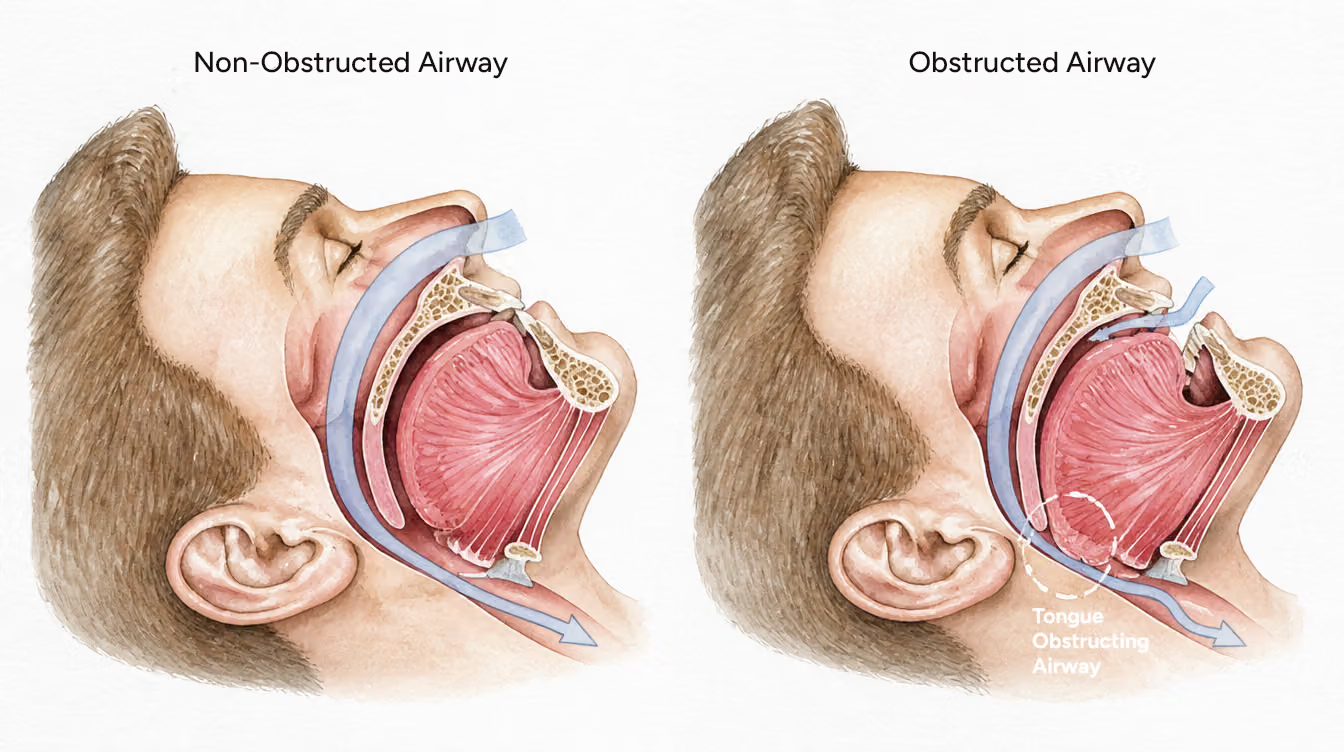
These symptoms can point to obstructive sleep apnea (OSA), a condition in which the upper airway repeatedly narrows or closes during sleep.
Some studies have found that grinding happens around the brief sleep disruptions associated with those breathing events.2 The connection is worth investigating, but it does not mean everyone who grinds has sleep apnea. Stress, certain medications, alcohol, caffeine, and other factors can also play a role. We look at those possibilities together.
My philosophy is that protecting your teeth starts with understanding the bigger picture. Your sleep is part of your whole-body health, and it belongs in the conversation.
What a Night Guard Can Protect
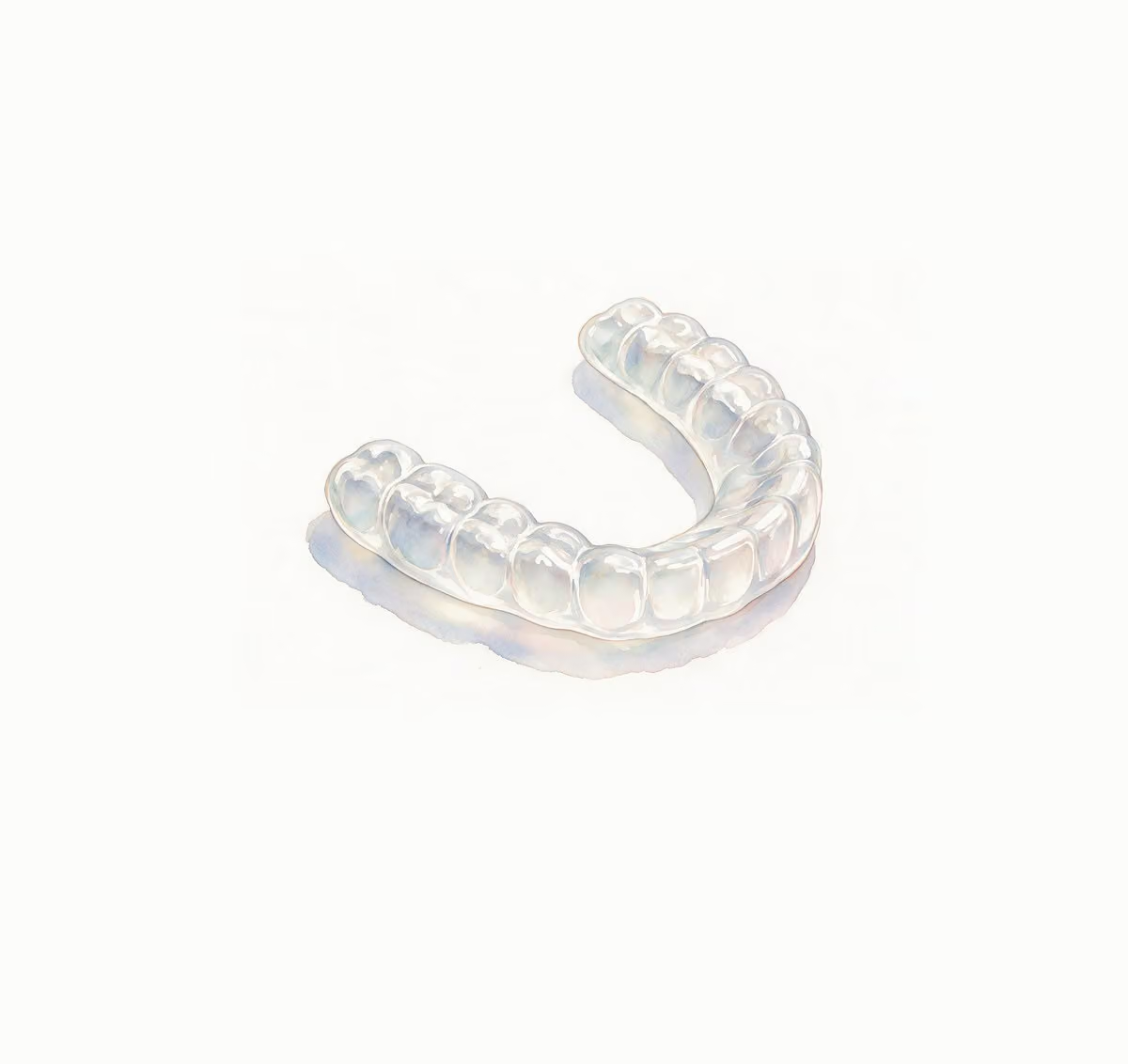
A custom night guard places a protective layer between your upper and lower teeth. A hard guard takes some of the wear that would otherwise affect your enamel or dental work.
That is a useful job. If you already have a guard, it might have helped prevent further damage. But protecting teeth does not necessarily stop the grinding, and a conventional guard is not designed to keep your airway open.
Why We Consider Breathing Before Choosing a Guard
It is easy to assume that any appliance worn during sleep will help with nighttime symptoms. The design and purpose of the appliance matter, though.
Small studies in people with diagnosed sleep apnea found that an upper stabilization guard could increase breathing disturbances in some participants.34
While this does not mean every guard makes breathing worse, in our experience, patients undergoing a home sleep study with their nightguard in, proves the latter.
At The Airway Dentists, our approach is to consider nighttime oxygenation & breathing before choosing an appliance. That reflects our focus on sleep and whole-body health. It is not a universal rule that everyone who grinds needs a sleep study.
Could Your Grinding Be Connected to Your Sleep?
If you grind your teeth, snore, or wake with a sore jaw, we will help you understand what deserves a closer look. Our team will review your symptoms and discuss how sleep testing could help guide your care.
Two Appliances, Two Different Purposes
A night guard and an oral appliance for sleep apnea might look similar at first glance. Both fit over teeth and are worn during sleep, but they do different jobs.
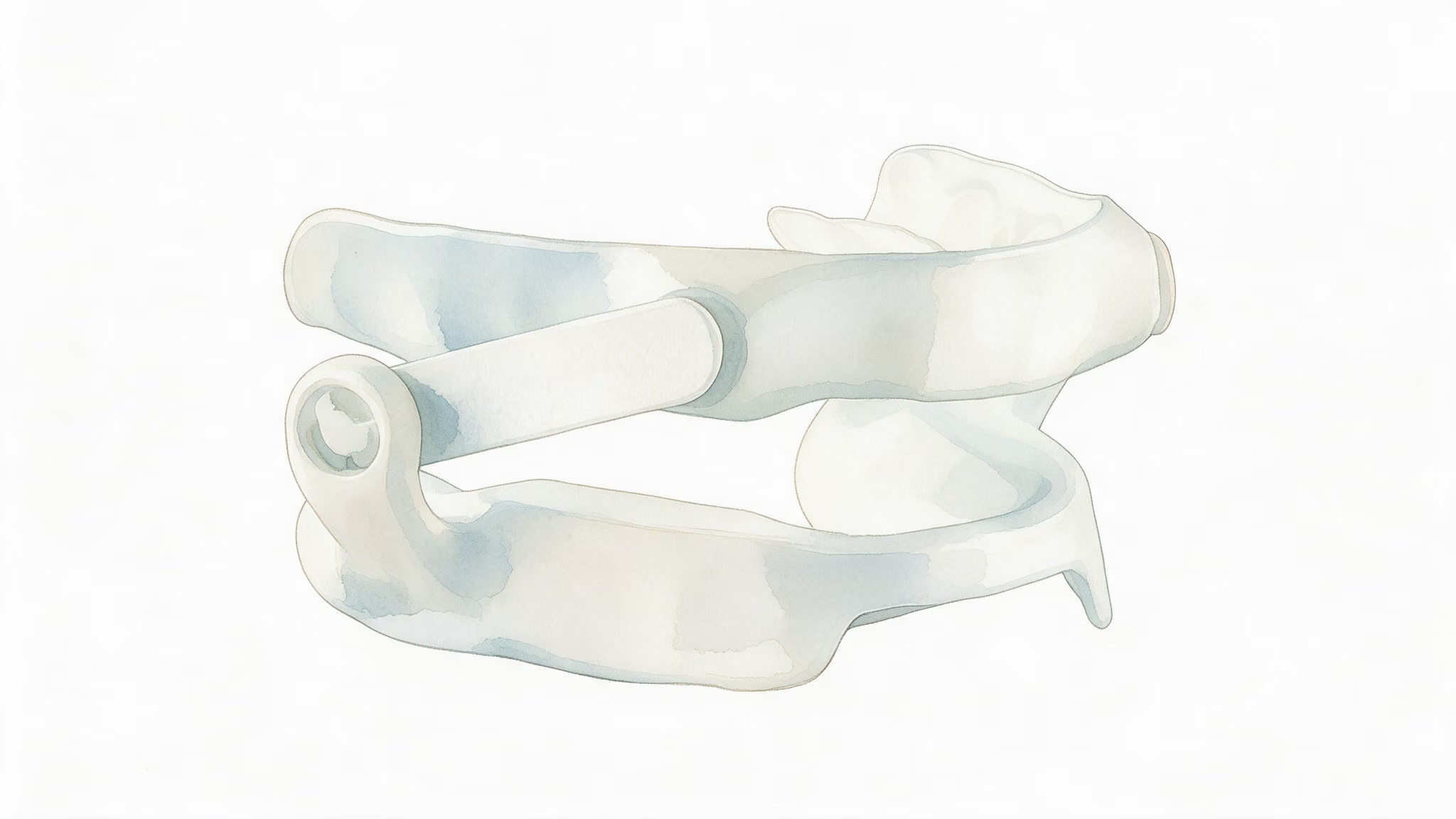
A mandibular advancement device fits over the upper and lower teeth and holds the lower jaw forward. This can help keep the airway open while you sleep.
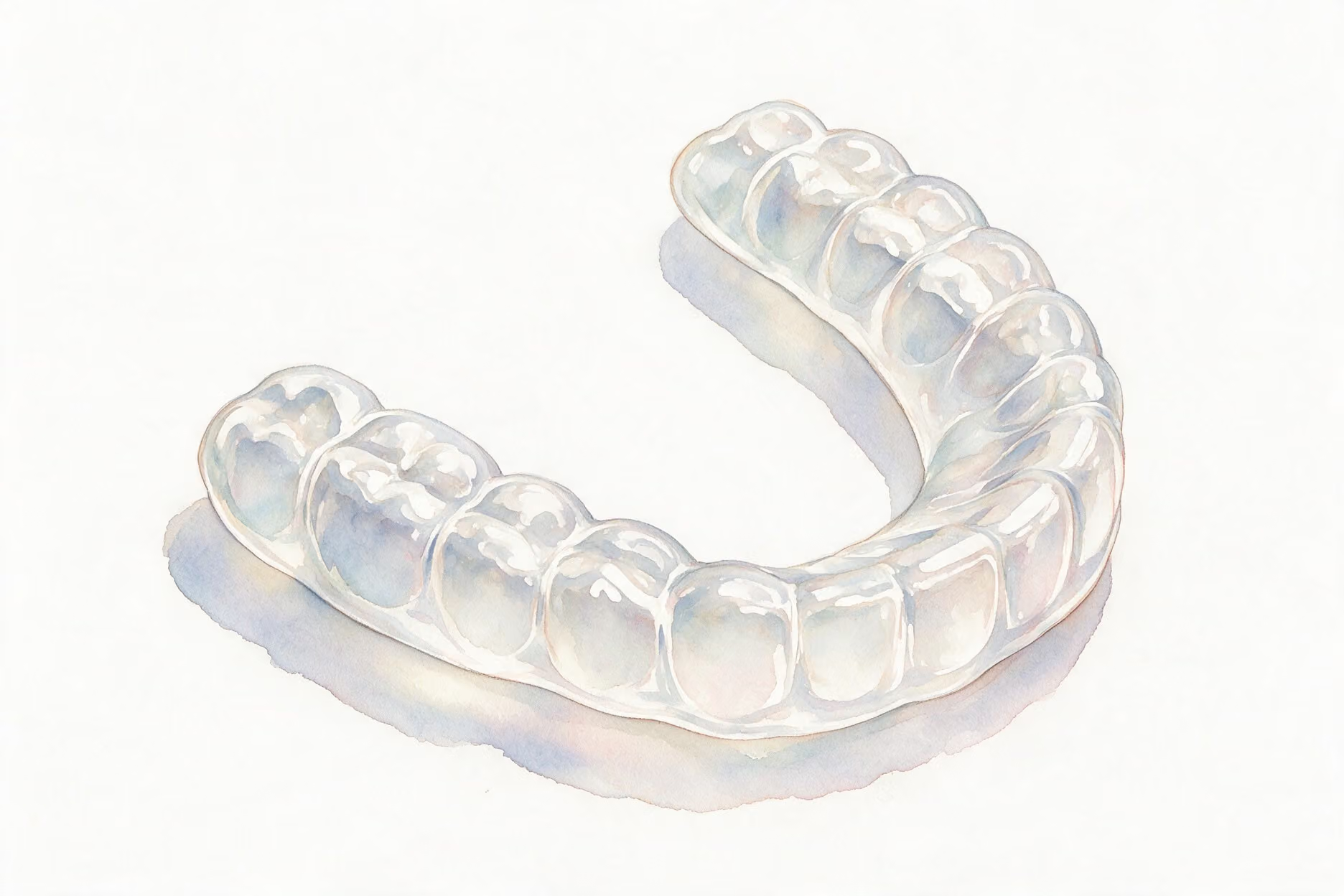
A conventional night guard usually fits over one row of teeth. Its main purpose is to protect teeth from grinding. It does not intentionally hold the lower jaw forward to treat sleep apnea.
For appropriate adults with diagnosed obstructive sleep apnea, a custom, adjustable oral appliance is an established treatment option. A sleep physician and a qualified dentist work together to determine whether it is a good fit for the person’s needs.5
The decision depends on your sleep findings, the health of your teeth and jaw, and your treatment goals. We want you to understand why an appliance is being recommended and what you can reasonably expect it to do.
How We Look at Grinding and Sleep Concerns
We start with a conversation about what you have noticed, your health history, and how you are sleeping. We also examine your mouth and jaw.
A sleep questionnaire can help identify concerns, but it cannot diagnose sleep apnea. When testing is needed, a sleep physician helps determine the appropriate study and interprets the results.
For some adults, a home sleep test is suitable. Others need an overnight study in a sleep center. The right test depends on your symptoms and medical history.
One important detail: a negative home test does not always rule out sleep apnea. If the result is negative, unclear, or incomplete, an overnight study in a sleep center is recommended to establish the diagnosis.6
Once the findings are available, our team reviews them with you. This gives us a clearer basis for discussing what belongs in your treatment plan.
What Happens After the Evaluation
If Sleep Apnea Is Diagnosed
The plan needs to address your breathing. When oral appliance therapy is appropriate, we can provide the dental appliance in collaboration with your sleep physician. Getting the appliance is step one in oral appliance care. Follow-up sleep testing helps check whether it is working, while dental and medical visits help monitor your progress and any changes in your bite or jaw comfort.
Protecting your teeth might still be part of the plan, but a conventional guard alone does not treat sleep apnea. Continue any prescribed treatment unless the clinician managing it advises a change.
If Sleep Apnea Is Not Identified
A conventional night guard might be a reasonable choice to protect your teeth. We can also talk through other factors contributing to the grinding.
If a medication could be involved, that is a conversation to have with the prescribing clinician. Do not change it on your own. Persistent jaw pain or ongoing sleep symptoms could also need further evaluation or care from an appropriate specialist.
The goal is to give you a plan that makes sense for what we find, with a clear explanation of the next step.
Already Have a Night Guard?
You do not need to have all the answers before coming in. Bring your guard, any broken pieces, and previous sleep-study reports if you have them. Tell us about changes in your sleep, morning discomfort, or concerns about your teeth.
If you keep replacing a damaged guard, it’s worth pausing to review what’s happening before buying another one.
I want you to leave understanding what your guard is protecting, what it cannot treat, and whether there is another concern we should address together.
Let’s Take a Closer Look
Whether your guard has cracked or you are wondering why you grind, our team will help you understand the wear on your teeth and how your sleep might fit into the picture.
Sources:
- Mayo Clinic. Bruxism (teeth grinding): symptoms and causes. https://www.mayoclinic.org/diseases-conditions/bruxism/symptoms-causes/syc-20356095
- Jokubauskas L, Baltrušaitytė A. Relationship between obstructive sleep apnoea syndrome and sleep bruxism: a systematic review. Journal of Oral Rehabilitation. 2017;44(2):144-153. https://pubmed.ncbi.nlm.nih.gov/27977045/
- Gagnon Y, Mayer P, Morisson F, Rompré PH, Lavigne GJ. Aggravation of respiratory disturbances by the use of an occlusal splint in apneic patients: a pilot study. International Journal of Prosthodontics. 2004;17(4):447-453. https://pubmed.ncbi.nlm.nih.gov/15382781/
- Nikolopoulou M, Ahlberg J, Visscher CM, Hamburger HL, Naeije M, Lobbezoo F. Effects of occlusal stabilization splints on obstructive sleep apnea: a randomized controlled trial. Journal of Orofacial Pain. 2013;27(3):199-205. https://pubmed.ncbi.nlm.nih.gov/23882452
- Ramar K, Dort LC, Katz SG, Lettieri CJ, Harrod CG, Thomas SM, Chervin RD. Clinical practice guideline for the treatment of obstructive sleep apnea and snoring with oral appliance therapy: an update for 2015. Journal of Clinical Sleep Medicine. 2015;11(7):773-827. https://jcsm.aasm.org/doi/10.5664/jcsm.4858
- Kapur VK, et al. Clinical practice guideline for diagnostic testing for adult obstructive sleep apnea. Journal of Clinical Sleep Medicine. 2017;13(3):479–504.