PEDIATRIC CARE
Early Orthodontics (Phase I Treatment)
The best time to guide growth is while it’s happening
It can be confusing when you see your child’s teeth coming in crooked, only to be told, “just wait until they are older.” In many cases, waiting means missing a key window for growth. When we evaluate children early, we can gently guide jaw development, support the airway, and help them grow into a healthier smile.

What Is Early Orthodontics?
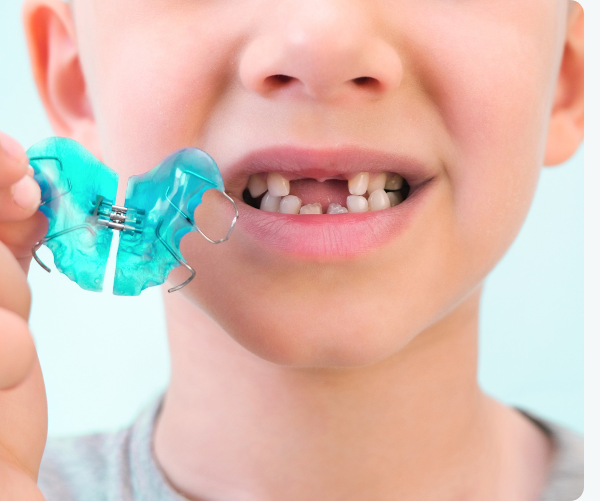
Phase 1 treatment begins while your child still has a mix of baby and adult teeth. The goal is to guide growth early, creating the space and structure needed for healthier development as adult teeth come in.
This phase is about more than straight teeth. By expanding the dental arches and addressing bite issues such as cross-bites or underbites, we support how the jaws, tongue, and airway develop together.
For many children, this stage of treatment also leads to noticeable changes in how they breathe and sleep. Improvements in mouth breathing, restlessness, and daytime focus can be signs that the airway has more room to function well.

THE WARNING SIGNS OF AIRWAY ISSUES
When to Schedule a Screening
We recommend an initial airway and growth screening by age 3 or 4. You do not need a referral to get answers. Signs that may be worth a closer look include:
- Visible crowding: Baby teeth are touching or overlapping. Healthy spacing usually leaves small gaps between them.
- Mouth breathing: Lips stay open while watching TV, resting, or sleeping.
- Snoring: Snoring in a child can be a sign of airway resistance and should be evaluated.
- Bite issues: An underbite, cross-bite, or open bite may be a sign that growth needs closer evaluation.
These signs can be subtle, but they may point to an airway issue worth a closer look.
WHY WE START EARLY
Why “Wait and See” Can Miss the Window
By age 12, most facial growth has already taken place. Traditional orthodontics often begins around that same time, after crowding, bite issues, or breathing concerns have already developed.
We take a different approach.
By evaluating children earlier, we can work with growth while change is still happening. Phase I treatment helps guide jaw development, create space for the teeth and tongue, and support healthier airway function from the start.

Create Room
When a child’s arch is narrow, early guidance can help create space before crowding becomes harder to manage.
Support Nasal Breathing
Jaw growth, tongue posture, and nasal breathing often work together, so we look at the full pattern.
Guide the Bite
Phase I treatment helps us steer growth while change is still possible, instead of waiting until the only option is correcting what has already developed.
WHY WE START EARLY
The Difference is in the Timing
This comparison shows how timing shapes the goals, methods, and outcomes of treatment.
Tools Designed for Growing Smiles
We choose the tool based on your child’s growth, bite, habits, and airway signs.
Invisalign® First
Clear aligners designed for growing children that expand the arches and guide incoming adult teeth simultaneously.
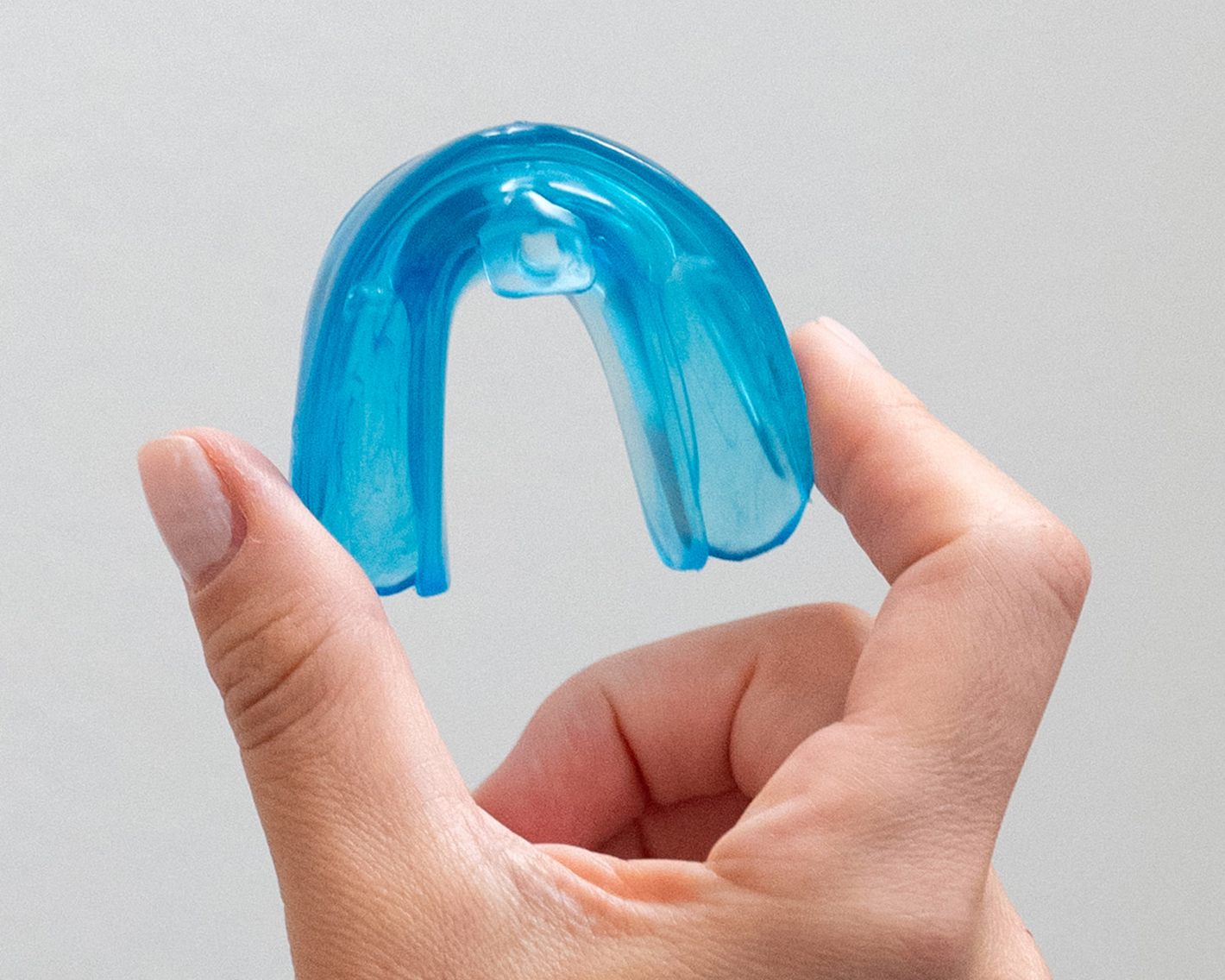
Toothpillow™ System
Soft, removable mouthpieces that gently reduce inward pressure and train the tongue to rest on the roof of the mouth.
Fixed Expanders
Custom devices that apply gentle, steady pressure to gradually widen the dental arches while the child is still growing.

DID YOU KNOW?
The upper and lower jaws need to fit together like a box and its lid.
The top jaw is like the lid, and the bottom jaw is like the box. If the lid gets bigger but the box stays small, they will not fit together the way they should!
WHAT TO EXPECT
A Supportive Experience
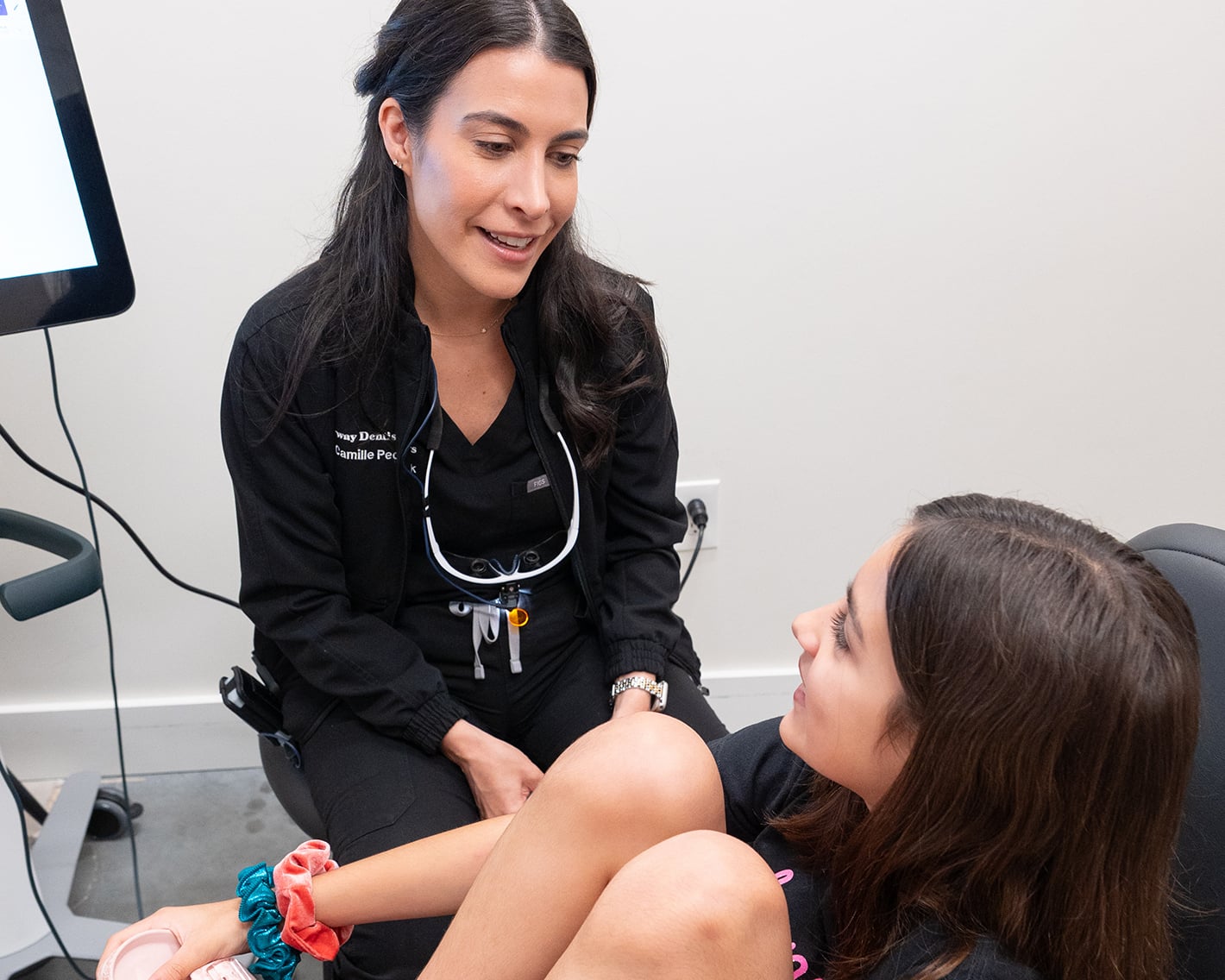
We know parents are often navigating a lot by the time they get here. Our goal is to make the experience feel calm, supportive, and easy to understand from the very first visit.
- We take time to listen. We want to understand what you’re noticing, what concerns you have, and what questions you’ve been carrying.
- We explain things clearly. You’ll hear straightforward guidance about what we’re seeing, what it means, and what your options are.
- We focus on steady, thoughtful care. Our approach is not rushed or one-size-fits-all. We work in a way that supports your child’s growth over time.
ASK THE EXPERTS
Frequently Asked Questions
What is the best age to start?
While many orthodontists see children at age 7, we recommend screening for airway and growth issues by age 3 or 4. The earlier we identify a growth restriction, the easier it is to guide it gently while the bones are still soft.
Will the expander hurt my child?
Most children adapt very quickly. There may be minor pressure when the expander is adjusted, but it is generally not painful. Our fixed expanders are designed to be comfortable and hygienic.
Will my child still need braces later?
Possibly. Phase I treatment lays the foundation by guiding jaw growth and creating space early. Some children still need a shorter round of braces or aligners later on, but treatment is often simpler because the underlying structure has already been addressed.
Why do you treat the lower jaw when others don’t?
If we only expand the top, the lower jaw can remain trapped or crowded. Expanding the lower arch ensures the tongue has room to rest properly, which is critical for keeping the airway open during sleep.