
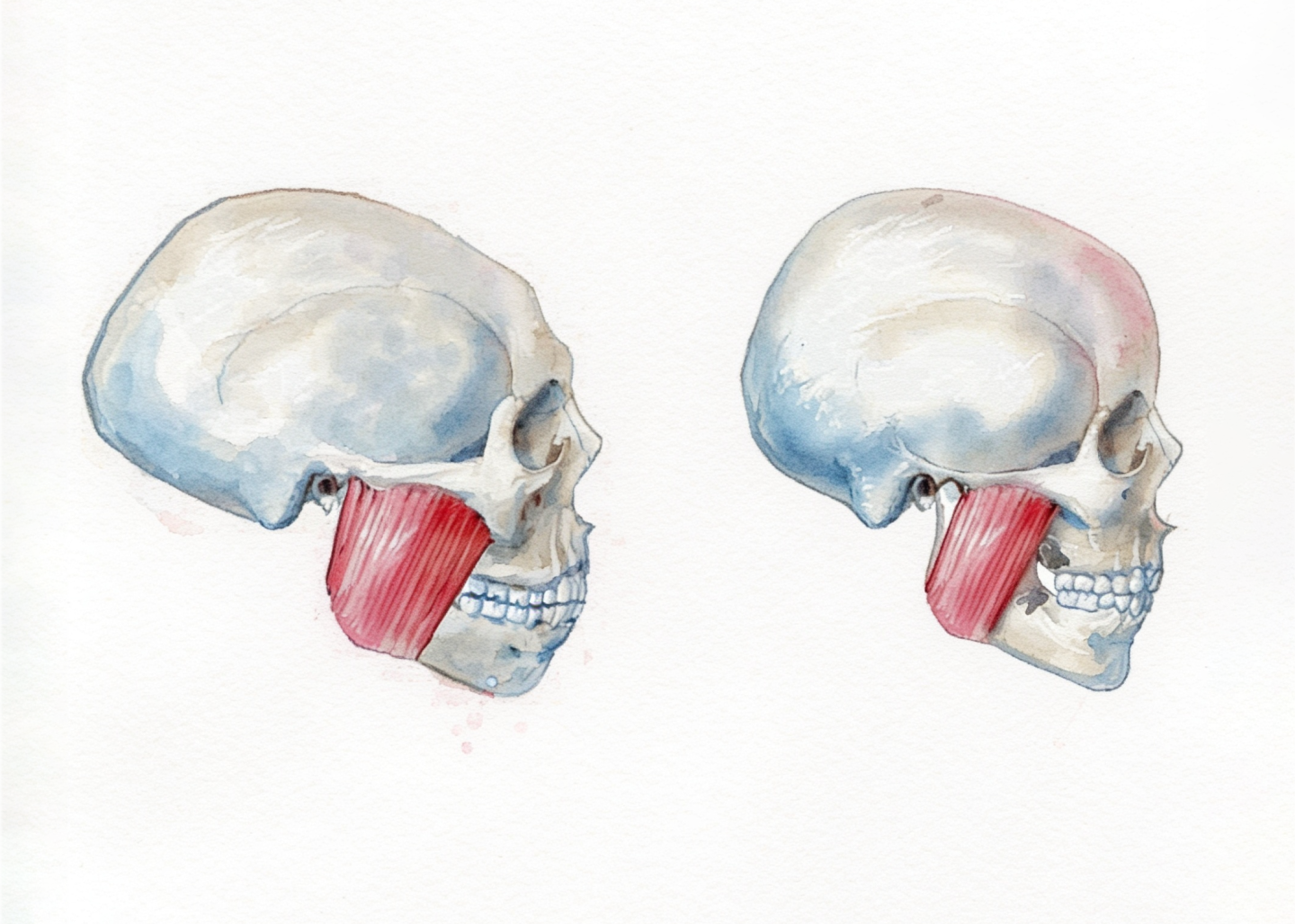

Why Are So Many Modern Mouths Crowded With Teeth?
Most parents are not shocked when their child’s dentist mentions crowding. Crooked teeth, narrow arches, impacted wisdom teeth, braces in middle school, and retainers for life have all become part of the expected dental story.
But just because something is common does not mean it is ideal. In our practice, I do not see crowding as just a tooth problem. I see it as a clue.
The better question is not only, “How do we straighten teeth?” It is, “Why was there not enough room for the teeth in the first place?”
For decades, dentistry and orthodontics have often treated crowding as an alignment issue. Move the teeth. Make the smile look straight. Remove wisdom teeth if there is not enough room. Treat snoring, grinding, or sleep apnea somewhere else, often years later.
Those treatments can be valuable and sometimes necessary. But they do not always address the bigger pattern. In many patients, crowding may be a sign that the jaws, palate, tongue, and airway did not develop with enough room to function well.
That is where the conversation about “shrinking jaws” begins.
Why Are Our Jaws Shrinking?
If you compare many ancient skulls to modern jaws, one difference is hard to miss. Earlier humans often had broader dental arches and straighter teeth.
This is not because our genes suddenly changed. Researchers have long studied how environment shapes jaw development, especially the shift from harder traditional diets to softer modern foods.
Anthropologist Dr. Robert Corruccini studied occlusion, or how the teeth fit together, in populations with different diets and levels of modernization. His work suggested that malocclusion (when the teeth or jaws do not fit together properly) was not simply genetic. Environmental factors, especially diet consistency, appeared to play a meaningful role.[1]
That doesn’t mean every crowded mouth is caused by soft food. Genetics still matter. So do allergies, nasal obstruction, tongue posture, oral habits, breastfeeding history, and many other factors.
But the larger point is important: jaws grow in response to function. How a child chews, breathes, swallows, sleeps, and rests their tongue can influence how the mouth and face develop.
Constrained jaw growth can cause a familiar pattern:
- Less room for teeth
- Narrower dental arches
- High or narrow palate
- Impacted wisdom teeth
- Increased tooth crowding
- Less room for the tongue
Jaw size is not just about teeth. The upper jaw also forms the floor of the nasal cavity, so its width can influence nasal airway space.
The Industrial Diet Problem
For most of human history, eating took more work. People chewed tougher meats, fibrous plants, roots, seeds, and grains that had not been softened or processed the way many foods are today. That chewing gave the jaw muscles a job to do, and those muscles helped support the growth of the face and jaws.
Modern food is different. Many children now eat more foods that are soft, blended, packaged, pre-cut, or easy to swallow with very little chewing. Pouches, snack bars, soft breads, pasta, nuggets, smoothies, and meltable snacks are helpful and convenient, but they do not ask much from the jaws.

That matters because growing bones respond to use. When children chew, the muscles of the face and jaw create gentle forces that help guide development. When food requires less chewing over time, the jaws receive less of that natural stimulation.
Research suggests that reduced chewing demands can influence jaw growth and dental arch development. Over time, this may contribute to narrower arches and more crowded teeth.[2]
This is not about blaming parents for modern food. It is about recognizing that the mouth develops through use. Like the rest of the body, the jaws need healthy function to grow well.
The Rise of Mouth Breathing
Breathing through the nose is how the body is designed to breathe most of the time, especially during sleep. The nose helps filter, warm, and humidify the air before it reaches the lungs. It also helps keep the mouth in a healthy resting position: lips closed, tongue resting on the roof of the mouth, jaw relaxed.
But for many children and adults, nasal breathing does not feel easy. Allergies, chronic congestion, enlarged tonsils or adenoids, tongue-tie, or other airway issues can make the body look for another way to get air in. That is when mouth breathing often becomes the backup plan.
The problem is that mouth breathing is not just “breathing through a different door.”
When the mouth stays open, the tongue often drops low instead of resting against the palate. In a growing child, that matters. The tongue helps support the shape of the upper jaw from the inside. When it stays low over time, the palate will grow narrower and higher, leaving less room for the teeth, tongue, and nasal airway.
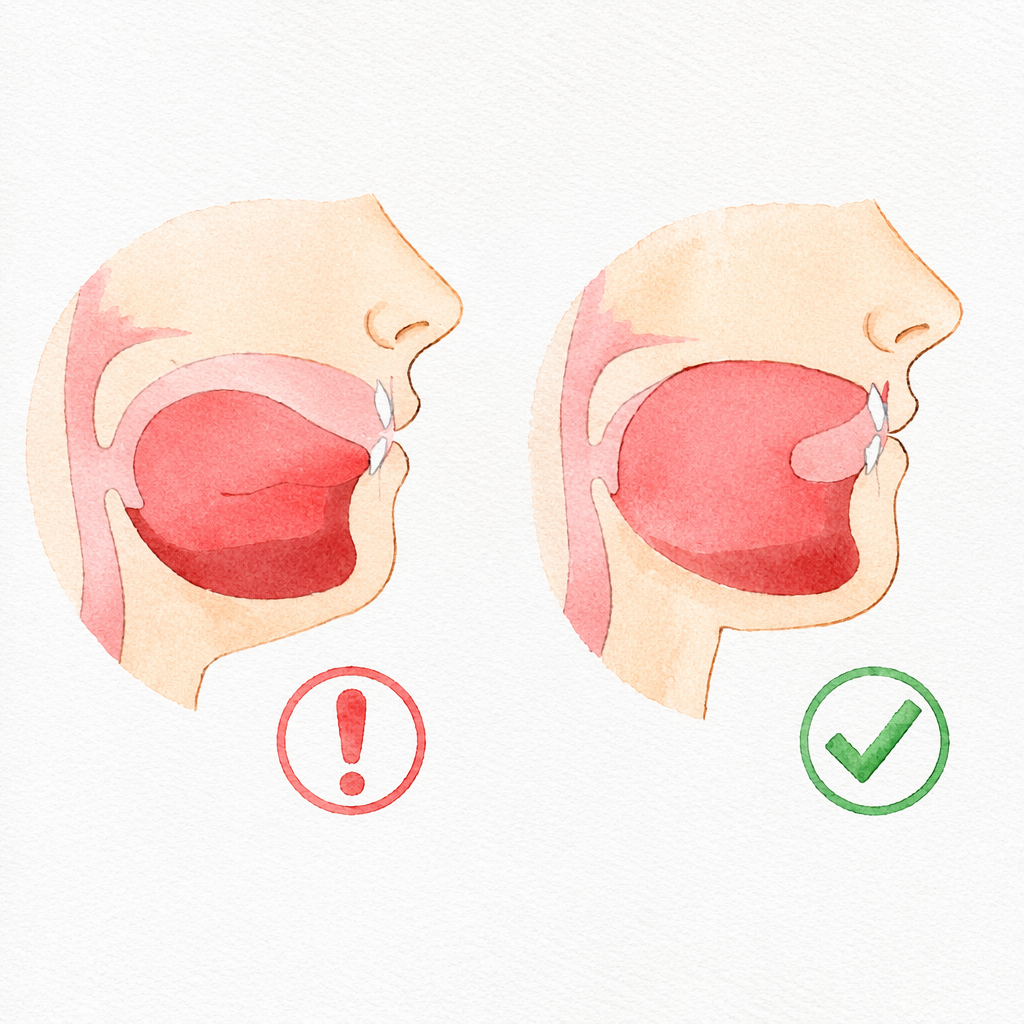
This is why chronic mouth breathing is worth paying attention to, especially in children. It may be a sign that the body is working around an airway problem, and research has connected mouth breathing in children with changes in facial growth, dental arch development, and bite alignment.[3]
The Consequences of a Shrinking Jaw
When the jaws develop with less room than the teeth and tongue need, the effects can show up in more than one place. A child may have crowded teeth. An adult may grind at night. Someone else may snore, mouth breathe, or wake up tired without knowing why.
These issues can seem unrelated, but they often share the same underlying question: is there enough space?
This pattern is often seen with:
- Dental crowding
- High or narrow palates
- Mouth breathing
- Snoring
- Teeth grinding or clenching
- Restless sleep
- Sleep-disordered breathing
- Obstructive sleep apnea
A smaller or narrower jaw does not automatically mean someone has sleep apnea. Breathing during sleep is complex, and many factors can contribute to it. But jaw structure can be one important part of the picture.
When the jaws are narrow or underdeveloped, the tongue will not have enough room to rest comfortably in the mouth. During sleep, the muscles relax. If the tongue falls back toward the throat, it can make the airway harder to keep open.
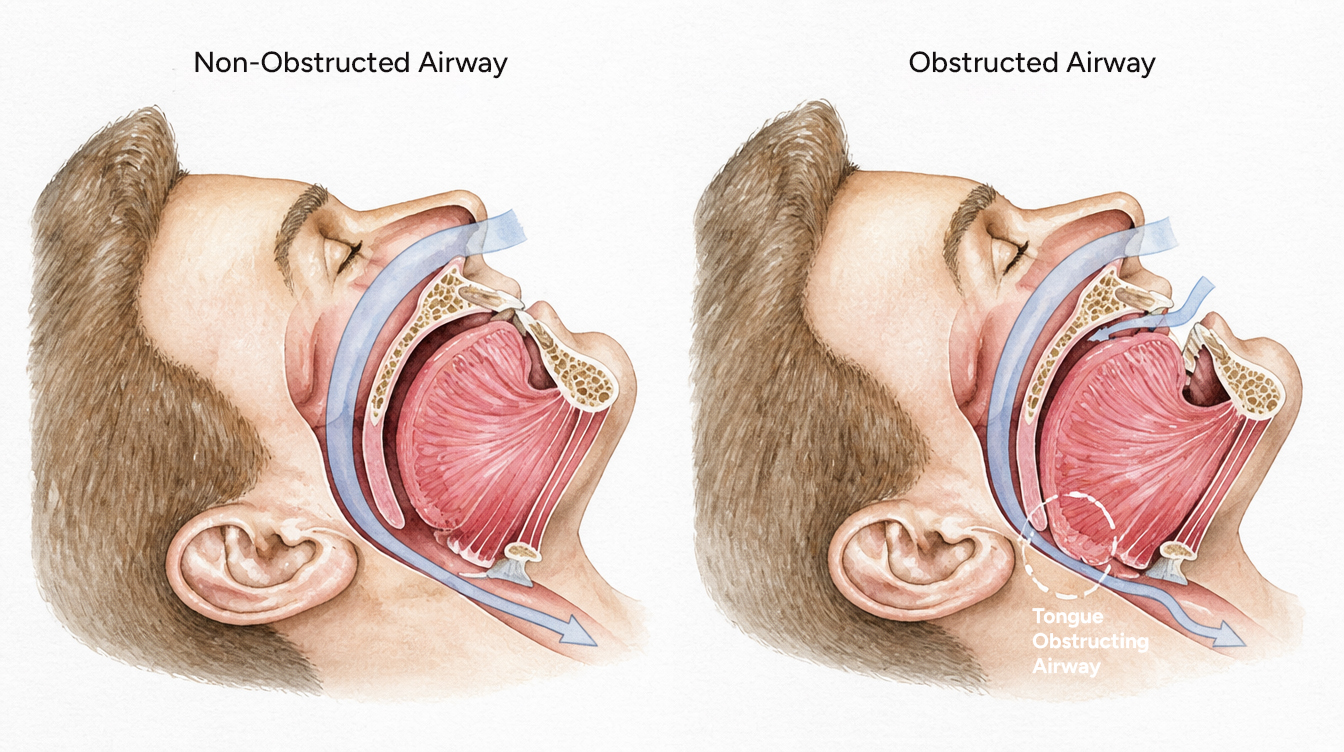
That restricted airflow leads to snoring, restless sleep, oxygen drops, or frequent small wake-ups through the night. Over time, poor sleep can affect energy, mood, focus, heart health, and overall well-being.
This is why we pay attention to jaw development. What starts as a space issue in the mouth can become a breathing and sleep issue over time.
Can We Fix It? The Airway Dentistry Approach
Traditional dentistry and orthodontics often focus on the teeth: how they line up, how they bite together, and how to protect them from wear. Those things matter. But in my work, I have learned that the teeth are often only one part of the story.
Airway dentistry asks a deeper question: does the mouth and face have enough space for healthy breathing?
Why the Usual Path Can Fall Short
Braces and aligners can create beautifully straight smiles. CPAP can be an effective treatment for obstructive sleep apnea. Night guards can protect teeth from the damage caused by grinding.
The challenge is that these tools are often designed to manage the symptom that is most visible or disruptive. They may not fully address the underlying factors that contributed to the problem, such as jaw development, tongue posture, nasal breathing, or airway structure.
That does not mean conventional treatments are wrong. Many patients benefit from them. But when we only treat the most obvious symptom, we may miss the pattern underneath it.
At The Airway Dentists, we take a root-cause approach. We look beyond the teeth alone to understand how the structure and function of the mouth, jaws, tongue, and airway may be contributing to the problem. The goal is not just to manage symptoms, but to support healthier breathing, more stable function, and longer-lasting results.
What We Do Differently: Restore Space and Function
In our practice, we evaluate the mouth and airway as one connected system. Instead of treating crowded teeth, mouth breathing, snoring, or grinding as separate issues, we look at how they may be working together.
An airway-focused evaluation may look at:
- Jaw width: the shape of the dental arch and the room available for the teeth and tongue
- Tongue posture: where the tongue rests and how it functions during breathing, chewing, swallowing, and speech
- Nasal breathing: whether the body breathes comfortably through the nose at rest and during sleep
- Sleep symptoms: snoring, restless sleep, mouth breathing, grinding, daytime fatigue, or waking up tired
Care depends on the patient’s age, anatomy, and symptoms. For some patients, treatment may include:
- Expansion appliances that widen the dental arches
- Myofunctional therapy to retrain tongue and breathing habits
- Oral appliance therapy for adult sleep-disordered breathing
- Collaboration with ENT specialists , sleep physicians, chiropractors, and more!
The goal is not just a straighter smile. The goal is to create enough space for healthy breathing, stable function, and long-term support.
Adults vs. Kids: What Is Possible?
In children, we can guide jaw growth easier because the bones of the face are still developing. When concerns are identified early, treatment may help support healthy tongue posture, nasal breathing, and enough room for permanent teeth to come in.
Adults still have options, too. Treatment is usually more individualized and may take longer, but many adults can still improve function, breathing, and sleep with the right care plan.
That is why awareness matters. The earlier we understand how the jaws, tongue, and airway are developing, the more options we may have to support healthy growth and long-term function.
Signs Your Jaw and Airway May Be Asking for Help
These signs do not diagnose a problem on their own, but they are clues that the mouth, jaw, and airway are worth looking at together as part of an airway assessment.
You might notice:
- Crowded or overlapping teeth
- A narrow or high-arched palate
- Frequent mouth breathing
- Snoring
- Waking up tired despite adequate sleep
- Daytime fatigue or brain fog
- Grinding teeth at night
- Jaw tension or clenching
- Frequent headaches upon waking
For children, parents may also notice restless sleep, bedwetting, difficulty waking, behavioral struggles, or trouble focusing. These symptoms can have many causes, but sleep and breathing should be part of the conversation.
If several of these signs sound familiar, an airway evaluation can help you understand whether jaw development, tongue posture, breathing, and sleep are connected.
Ready for Answers?
Crowded teeth, mouth breathing, snoring, and restless sleep may be connected. An airway evaluation can help you understand what is really going on.
What to Expect at an Airway Evaluation
An airway evaluation is designed to be thorough, but it should not feel overwhelming.
Your visit includes:
- A sleep and health questionnaire reviewing symptoms and history
- A digital 3D scan of the teeth and arches
- A clinical airway exam assessing tongue posture, palate shape, and oral function
- A sleep screening or referral if breathing issues are suspected
From there, we will have a better understanding of whether jaw structure, tongue posture, or breathing patterns may be contributing to the symptoms you are seeing.
Questions to Ask Your Dentist, Orthodontist, or Sleep Doctor
If you are exploring treatment options for crowding, snoring, mouth breathing, grinding, or sleep concerns, it is worth asking how the airway fits into the plan.
Helpful questions include:
- Will you evaluate my airway as part of treatment planning?
- How might jaw size affect breathing during sleep?
- Are there options that expand the arches rather than remove teeth?
- Should I be screened for sleep-disordered breathing?
- How does tongue posture influence my treatment outcome?
- Would collaboration with an ENT or sleep physician help?
You do not need to know all the answers before you ask. Better questions open up better conversations, and better conversations often lead to better care.
Sources
- Corruccini RS. An epidemiologic transition in dental occlusion in world populations. Am J Orthod. 1984 Nov;86(5):419-26. doi: 10.1016/s0002-9416(84)90035-6. PMID: 6594064. https://pubmed.ncbi.nlm.nih.gov/6594064/
- Corruccini RS. An epidemiologic transition in dental occlusion in world populations. Am J Orthod. 1984 Nov;86(5):419-26. doi: 10.1016/s0002-9416(84)90035-6. PMID: 6594064. https://pubmed.ncbi.nlm.nih.gov/6594064/
- Grippaudo C, Paolantonio EG, Antonini G, Saulle R, La Torre G, Deli R. Association between oral habits, mouth breathing and malocclusion. Acta Otorhinolaryngol Ital. 2016 Oct;36(5):386-394. doi: 10.14639/0392-100X-770. PMID: 27958599; PMCID: PMC5225794. https://pubmed.ncbi.nlm.nih.gov/27958599/